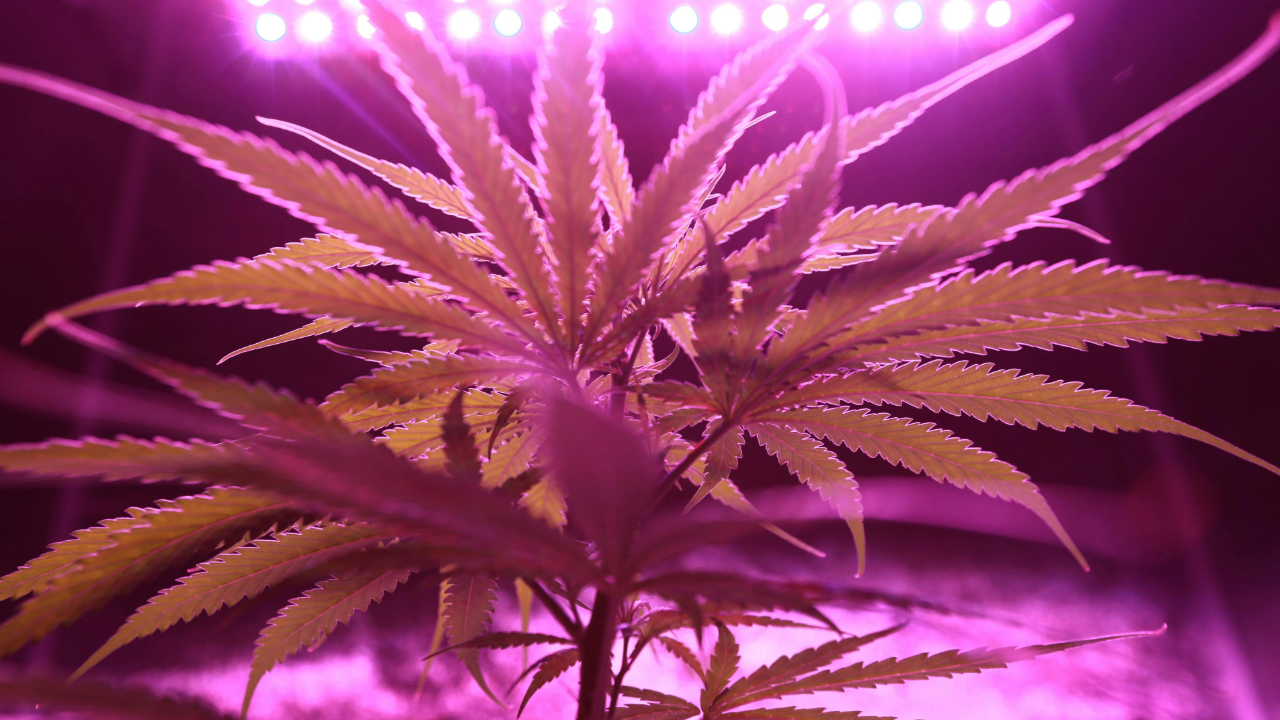
Alebrije Genetics is a breeder focused on crafting unique cannabis cultivars with bold terpene profiles and vibrant expressions. Inspired by the colorful and imaginative spirit of traditional Mexican alebrijes, their work blends creativity with careful selection. The result is a lineup that stands out for both flavor and visual appeal.
PICTURES: Alebrije Genetics (Growing Autoflowers)
1. What first got you interested in cannabis breeding, and what were your earliest projects like?
I got into breeding cannabis as a way to increase and preserve expensive or rare genetics I had bought. My earliest projects were all photoperiod using regular seed which is funny because I now primarily create feminized autoflowers. The first project I made intentionally I called “Sour Pink Lemonade” which was (Banana OG x Sour Diesel) x (Limonata x Pink Bubblegum).
2. What traits do you personally prioritize most when selecting parent plants?
Aroma profiles, effects and resin production are my top priorities when making selections. Vigor, structure and sprout to harvest time are my next round of considerations when determining the final selection of a given project.
3. Can you walk us through your typical breeding process from selecting parents to releasing a line?
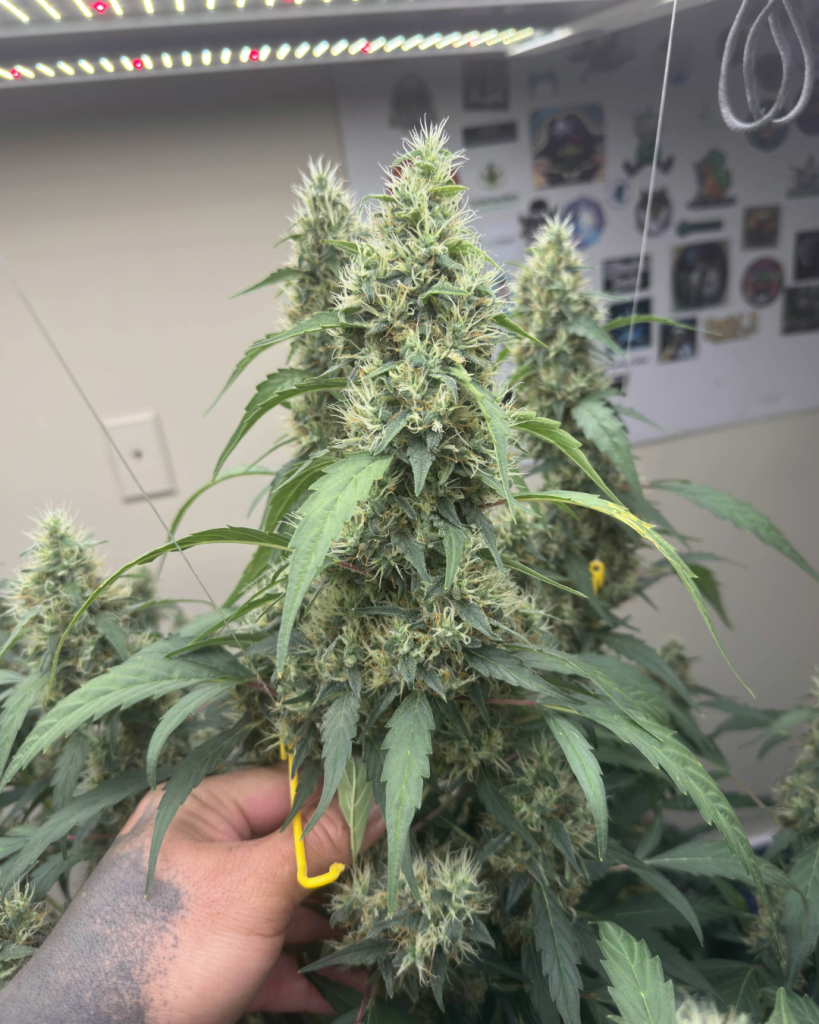
Typically when starting a project I’ll have some specific goals in mind of what I’m trying to create. It may be a specific aroma profile I’m after or creating a certain mixed ratio of cannabinoids in the offspring or specific medicinal effects etc. Usually for a given project I’ll have a specific strain in mind that I want to use as the pollen donor. From there I look at my seed vault inventory and make a list of potential strains that may combine well with the pollen donor to achieve the goals I’m after.
My breeding process is constantly evolving, but lately I pop somewhere between 5-10 seeds of the intended pollen donor, which I begin spraying with STS around day 10 to 14 to reverse sex for making feminized seeds. Roughly 1 week after I pop the potential pollen donors I begin germinating all the potential seed moms, as many as I can fit in my space. I proceed through the run, narrowing down the pollen donor selection as more traits become visible, until finally I’ve landed on the best one; culling all the others as I go. I proceed to pollinate all the moms; I no longer save pollen and only work with a live pollen donor plant in each breeding run.
After about 5-6 weeks from pollination I harvest the moms and hang dry for 2 or 3 weeks before hand shucking all the seeds. Depending on the project, I will grow out and stress test the seeds from my top 2 or 3 choices of the best looking seeds moms, and also send seeds to my tester crew to grow as well. The strains that fulfill the goals I’m chasing and get me the most excited are the ones that get pegged for a public release. From there I begin mentally creating an Alebrije creature that fits the vibe and finding an artist to bring it to life.
4. How many generations do you usually run before you feel a line is stable enough to release?
I don’t have a set format for how many generations a specific strain needs to be inbred before releasing. Every project I release is different and may have different intentions for the grower/consumer. I’ve released polyhybrids, true F1’s, F2’s, F3’s, F4’s and will be releasing my first F5 project this November.
My favorite generation to release for the growers is a true F1. A true F1 means both parents were stable inbred lines; both must be at least at an F3 or F4 stage to qualify. True F1’s tend to have the most vigor and speed while often providing a nice mashup of the two parent’s traits.
5. What cultivar or project are you most proud of creating so far?
I’m probably most proud of my Tangy Rainbowz project which is (Rainbow Guava #5 x Tangy Tibuguana). It’s my second full photoperiod to autoflower conversion project, but I had more specific goals and intentions than my fist photo conversion the Dawgwalker. It’s also the strain I’ve taken the furthest (to F5 generation) and worked for the longest amount of time (well over 3 years from start to release). I’m planning to release the final version this November as an Alebrije called the Fruity Flamedusa.
6. What trends in cannabis genetics excite you right now?
The Autoflower and Mutant cannabis trends probably get me the most excited these days. It’s really cool watching breeders improving those gene pools using high quality photoperiods and inbreeding them to bring out and stabilize the high quality traits attached to the mutant or autoflower trait. I think Night Owl on the autoflower side and Bin Chicken on the mutant side are doing some of the most exciting breeding work in cannabis these days.
7. What mistakes do you see new breeders making?
I think one of the biggest mistakes I see from new breeders is using 2 polyhybrids to be the parents of their new strain. It’s incredibly common and while it may yield something of quality, there will be very little stability in the new strain and you never know what you might get.
8. If someone wanted to start breeding today, what advice would you give them?
First, buy the book Marijuana Botany by Robert Clarke and read chapter 3 on Genetics and breeding. It’s very helpful to have a basic understanding of how genetics work and what’s happening within a population as you inbreed or outcross a genetic line.
My second piece of advice would be to choose 2 stable inbred lines (at least F3 or F4) of strains you really like and think might bring improvements to each other. Cross these to make a true F1 and then continue inbreeding to F3 or F4 and try and lock down the traits you wanted in the offspring. For example, you may have 1 larger size and high yielding parent that has loose bud structure and the other parent that is much smaller but has dense bud structure and a loud terpene profile. You could cross these parents and continue working the line forward to try and stabilize the offspring with large size and high yielding plants with the dense terpy buds by the F3 generation.
9. What is your best tip for new growers of any kind?
New growers tend to obsess over small issues or mishaps in the garden. I’d say just relax and let it roll. Take lots of notes and try to learn and improve as a grower, but don’t worry too much over what nutrient deficiency is causing little rust spots on a few leaves. Cannabis is very resilient and will often turn out great despite some environmental issues.
10. Where would you like to see the state of cannabis in 5 to 10 years?
I already think that autoflowers are getting to a point where they rival (and sometimes beat) the quality of great photoperiods. I hope and fully expect in the next 5-10 years Autoflowers will be even more respected for their quality and potential for easy growing. It just takes more breeders using elite photoperiod strains and converting them into the auto format to continue improving the auto gene pool. I also hope to see more states legalize home growing and more people finding out how easy it is to grow their own medicine. It’s not really “freedom” if we can’t grow our own medicinal plants without government interference.
Where To Find Alebrije Genetics
Alebrije Genetics’ Official Website