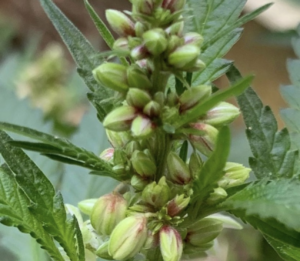
Greenguy Genetics has built a reputation in the growing scene for keeping things simple, intentional, and rooted in the fundamentals of the plant. With a focus on thoughtful breeding, and letting genetics express themselves without overcomplication, Greenguy represents a lane of cultivation that values patience, observation, and respect for the process over chasing trends.
PICTURES: Greenguy Genetics (Growing Autoflowers)
Greenguy Genetics Interview
1. What first got you interested in cannabis breeding, and what were your earliest projects like?
It started from a very personal place. My wife was struggling with anxiety, and I had found a couple strains that she not only enjoyed, but that genuinely seemed to help her. That was the turning point for me. I wanted to see if I could bring those qualities together, take what worked in both and try to create something even better for her.
That idea became my first real project, which turned into Funeral Desserts. Early on, it was a lot of trial and error, learning how traits express and how unpredictable genetics can be. But having a clear purpose behind it, helping someone I love, kept me focused and patient through all of it.
2. What traits do you personally prioritize most when selecting parent plants?
I lean heavily into effect first. For me, cannabis is as much about mental and emotional impact as it is about structure or yield. I look for plants that actually do something, help with anxiety, ease pain, shift your mindset in a positive way.
Beyond that, terpene profile, vigor, and resilience matter a lot. But if a plant doesn’t have a meaningful effect, it doesn’t make the cut, no matter how good it looks.
3. Can you walk us through your typical breeding process from selecting parents to releasing a line?
It starts with observation. I’ll run multiple phenotypes and spend real time with them, watching how they grow, how they smell, and most importantly, how they feel.
Once I find strong candidates, I choose parents that complement each other, not just doubling down on strengths, but filling in gaps. From there, I make the cross and start hunting through the offspring.
That’s where the real work begins. I’m looking for consistency, but also standout expressions. Those get worked further through inbreeding, backcrossing, or selective pairing until the line starts to lock in.
Nothing gets rushed. A line has to prove itself over multiple runs before I’ll even consider releasing it.
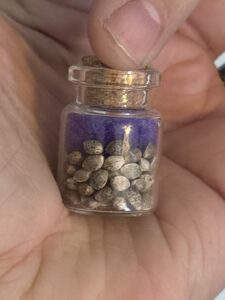
4. How many generations do you usually run before you feel a line is stable enough to release?
Usually somewhere around F3 to F5 at minimum, sometimes further depending on how complex the traits are. Stability isn’t just about everything looking the sam, it’s about knowing what you’re going to get while still preserving what makes the strain unique.
5. What cultivar or project are you most proud of creating so far?
The Sawce is probably the one I’m most proud of. It started as an auto-to-photo project, but once I discovered the migraine-relieving effects in the photoperiod version, my focus shifted hard in that direction.
The photo version has stayed strong and consistent in those medicinal effects, which is something I take seriously. I’m still working on bringing that same level of relief into the autoflower version, but it’s not quite there yet. That’s one of those projects that really shows how much work it takes to carry specific effects across different formats.
6. What trends in cannabis genetics excite you right now?
I’m really interested in the shift toward purpose-driven breeding, people focusing on specific effects instead of just chasing THC numbers.
Autoflowers are also evolving fast. The gap between autos and photos has closed a lot, and that opens the door for more accessible growing without sacrificing too much quality. There’s still work to do on the medicinal side, but the progress is real.
7. What mistakes do you see new breeders making?
Rushing is the biggest one. People want to release something after one or two generations without really understanding what they’ve made.
Another is chasing hype instead of building something meaningful. It’s easy to follow trends, but that doesn’t always lead to good or lasting genetics.
And not keeping detailed records, that’s a huge one. If you’re not tracking what you’re doing, you’re guessing.
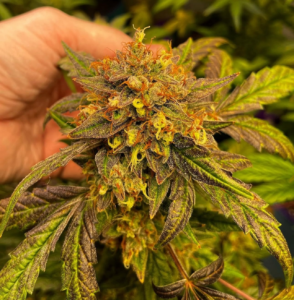
8. If someone wanted to start breeding today, what advice would you give them?
Start small and stay focused. You don’t need a huge setup, you need patience and attention to detail.
Learn your plants. Grow them out fully. Pay attention to how they change, not just how they look at one point in time.
And be okay with things not working out. Some of the best lessons come from projects that didn’t go the way you expected.
9. What is your best tip for new growers of any kind?
Don’t overcomplicate it. Cannabis wants to grow. Most problems come from doing too much, overwatering, overfeeding, constantly trying to “fix” things.
Learn to read the plant. It’ll tell you what it needs if you’re paying attention.
10. Where would you like to see the state of cannabis in 5 to 10 years?
I’d like to see a shift toward respecting the plant for what it can actually do, especially in terms of mental health and physical relief.
Less focus on THC percentages, more focus on full-spectrum effects and intentional breeding.
And I’d really like to see space for smaller breeders to thrive. That’s where a lot of the real innovation happens, people working with purpose, not just scale.